Open-source handhelds have matured over the years, but one problem has never been properly solved: the Nintendo DS and 3DS both have two screens. Stretching those games onto a single 16:9 panel has always been a compromise. The AYN Thor is the first Android handheld I have used that treats dual-screen gaming as a design priority rather than an afterthought.

Specs and What You Get
The Thor runs Android 13 on a Snapdragon 8 Gen 2 with a 6000mAh battery and 27W fast charging. It weighs 377g in my testing, comes in retro gray, black, white, and purple transparent, and supports 4K DP output. Emulation performance covers multiple-resolution PS2 and most Switch titles, depending on the emulator.
The Two Screens
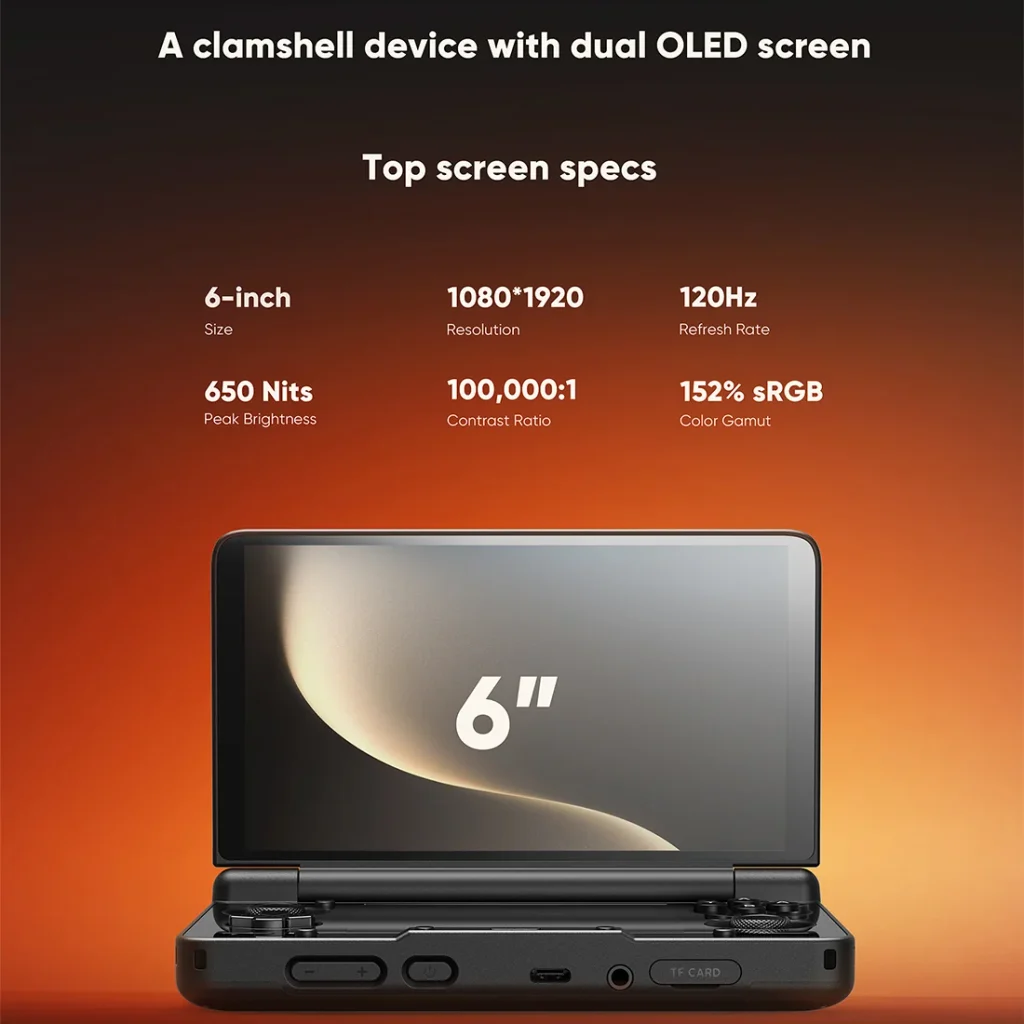
The top screen is a 6-inch 16:9 OLED at 1920×1080 with 120Hz refresh and high-brightness DC dimming. Below 30% brightness it switches to high-frequency PWM around 1000Hz. The bottom screen is a 3.92-inch 8:7 panel at 1080×1240 with near-full-brightness DC dimming, only switching to PWM somewhere between 10% and 15%. Both screens are brighter than any retro handheld I have handled; I found 60% brightness plenty.
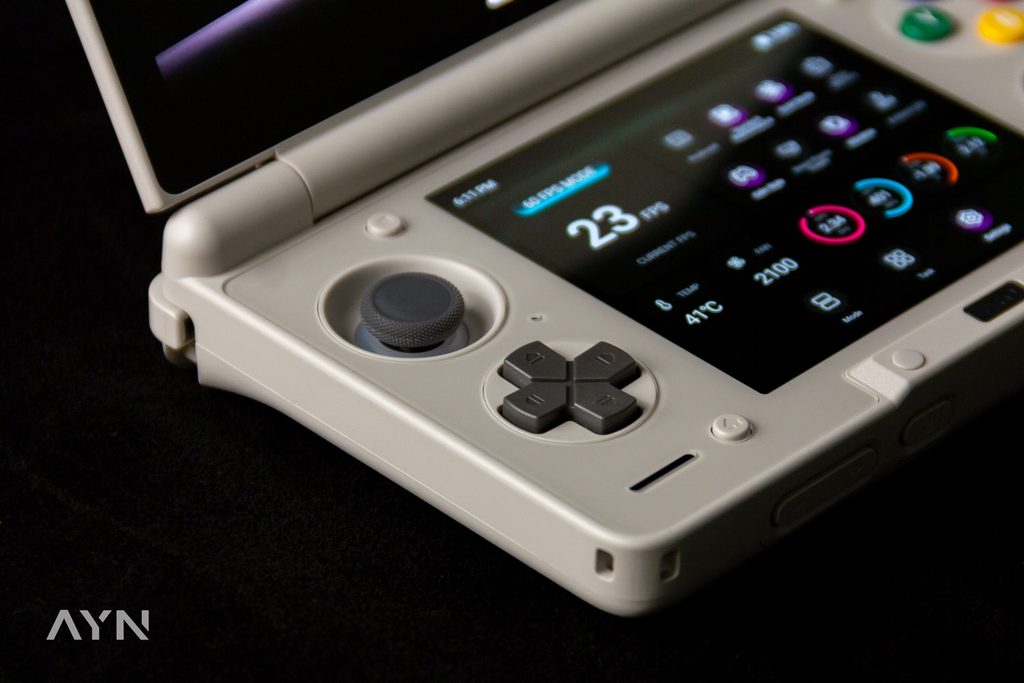
The dual-screen implementation works like connecting two monitors to a PC. The main screen feeds an internal expansion display. The bottom screen sits almost flush with the shell, with barely any visible black border even on the gray model. This is similar to what RP has done before.
Controls and Layout
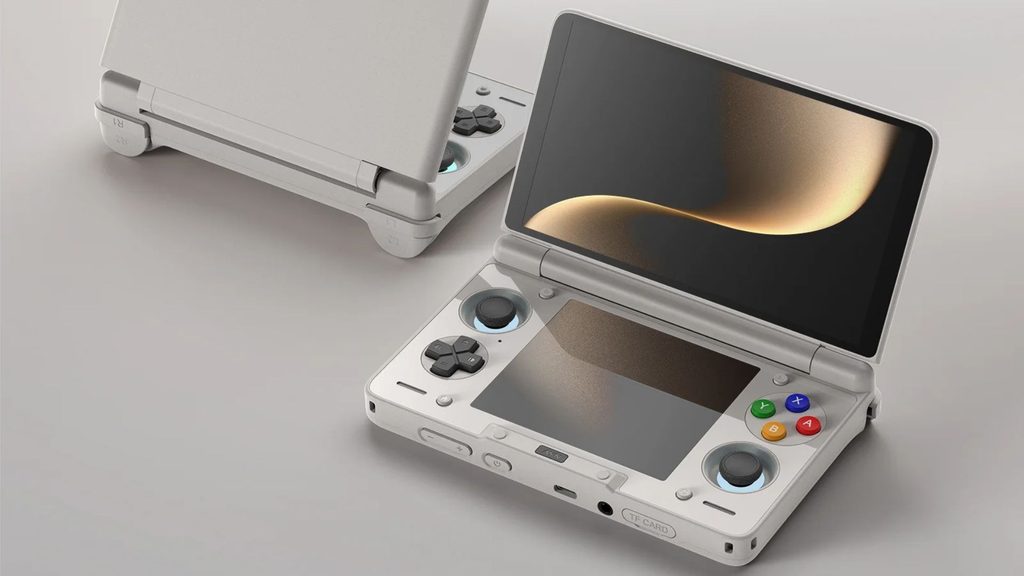
The Hall-effect joysticks are recessed and protrude about 1mm, with lights underneath. The D-pad and ABXY buttons are conductive rubber and stick out roughly 2mm. Select and Start sit above the bottom screen, with Home and Back below. A dedicated control center button calls up the bottom-screen dashboard from any app.
All ports are on the bottom edge: volume, power, a multifunction USB-C for charging and video, 3.5mm audio, and a TF card slot. Lanyard loops sit on both sides. The power button requires a vibration followed by a two-second hold before the AYN logo appears.
The shoulder buttons are slightly smaller than on typical horizontal handhelds but feel good. L1/R1 are clicky; L2/R2 are smooth with about 4–5mm travel. The hinge is tight with a small amount of side play as a safety design, and it holds three angles up to 180 degrees.
The Hinge and Screen Ratio Debate
The lid has no cushioning on the A-side; two narrow rubber bumps on the C-side press against it. If you press hard, the screen can flex. AYN includes a foam spacer to store between the screens when not in use, which solves it.
Why 8:7 instead of 1:1? A 1:1 bottom screen would be too tall and throw off the top screen’s proportions. The 8:7 ratio still gives plenty of room for the controls, unlike the Ayaneo DS, which squeezed its buttons to fit a 4:3 5-inch screen. The Thor’s layout is more comfortable for actual gaming.
Performance and Price
The Snapdragon 8 Gen 2 handles PS2 and most Switch games well. The Thor is currently priced at $502.29. You can check the current price and availability here.
If you want a smaller, single-screen retro device, the Anbernic RG 40XXV is a great budget option. If you prefer raw performance over dual screens, the AYN Odin 3 is the more powerful choice.
The Bottom Line
The AYN Thor is a thoughtfully designed dual-screen handheld. The screen ratio, port layout, and hinge all show careful consideration. The lid flex is a minor flaw, but the included foam spacer addresses it. For anyone who wants to play DS and 3DS games the way they were meant to be played, the Thor is the most convincing Android option yet.
Disclosure: This article contains affiliate links. If you purchase through them, we may earn a commission at no extra cost to you.