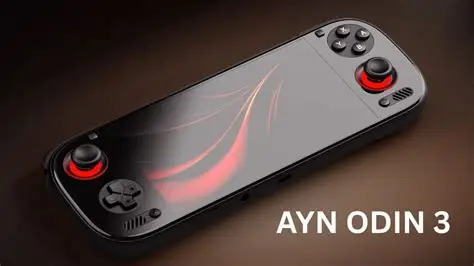
I bought the AYN Odin 3 for one reason: performance. With a Snapdragon 8-series chip inside, it promised to be one of the most powerful Android handhelds ever made. After spending weeks with it, I can confirm the performance is real. But it also forced me to ask a question I did not expect: do you actually need a handheld this powerful if it is also this big?
Performance: Genuinely Unmatched
The Odin 3 handles emulation like nothing else I have used. PC game emulation through translation layers ran surprisingly well—Monster Hunter World, Rise, and Frontier were all playable without major compromises. Older emulators are effortless. With PPSSPP’s Chinese servers back online and multiplayer lobbies filling up again, I spent several nights playing Monster Hunter Portable 3rd online. It was genuinely moving, like catching up on something I missed as a kid.
The Problem: Size and Portability
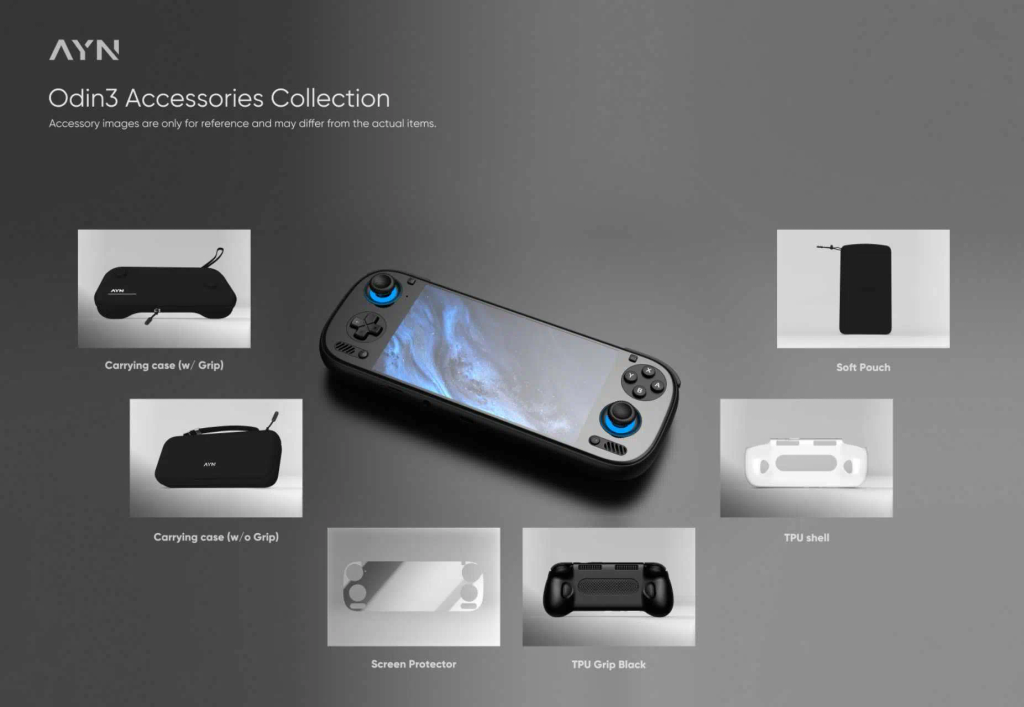
Here is the catch. The Odin 3 weighs 390g and is physically large. It is not a pocket device. For me, that defeats part of the purpose of an Android handheld. If I want portable retro gaming, I would rather carry a smaller device like the Anbernic RG 40XXV, which I reviewed earlier. For high-performance gaming, I would rather use a Windows handheld or my desktop. The Odin 3 sits in an awkward middle ground: too big to carry everywhere, but not as capable as a full Windows machine for demanding PC titles.
That said, if your PC game library is fixed and already within the range of translation compatibility, and you do not care about pocketability, the Odin 3 is an excellent machine. It is a niche device, but it serves that niche very well.
Screen and Controls: Excellent
The 6-inch 120Hz OLED display is beautiful. Above 30% brightness, I noticed no obvious flickering. The Hall-effect joysticks and quiet D-pad feel great in the hand, and the overall build quality is solid. Streaming decode latency is under 1ms, and bypass charging is a welcome feature for long sessions. I also tested Hyrule Warriors: Age of Calamity on the Switch emulator at 1080p/60fps—it ran stably, with enough headroom for future software.
The Chip Controversy: Snapdragon 8e vs. Dragonwing Q8
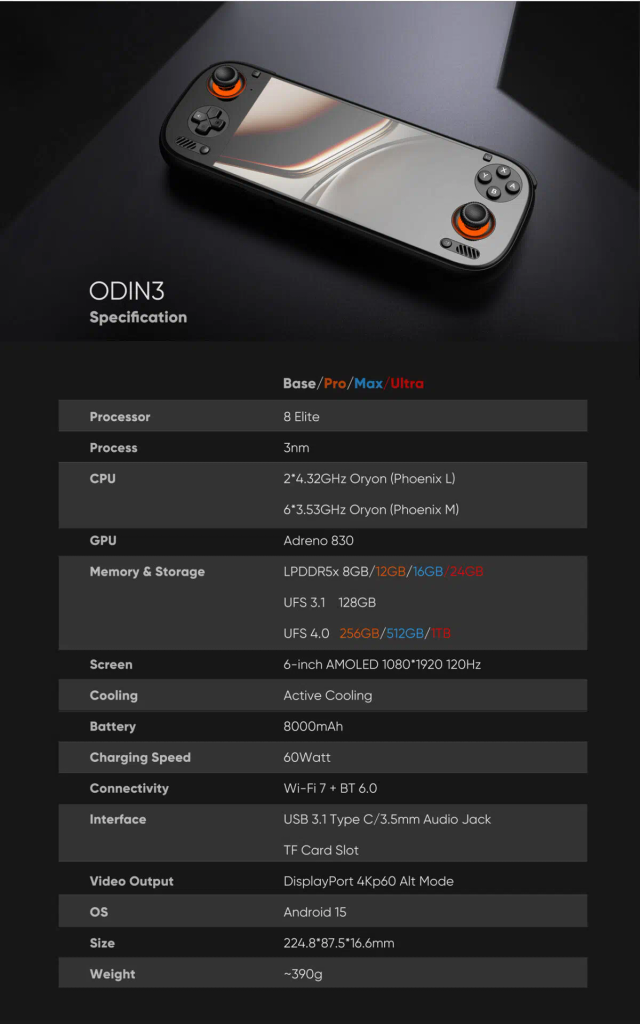
Early buyers discovered a serious issue: the Odin 3 lost performance when unplugged. The chip inside was not a standard Snapdragon 8e like the one in the Y700 Gen 4 or KONKR FIT 8e. It turned out to be a custom variant originally designed for IoT devices, with the modem and AI computing blocks cut down. AYN eventually fixed the performance bug, but the naming changed. The chip is now marketed as the “Dragonwing Q8,” not Snapdragon 8e.
My take: if performance and driver compatibility are identical—and so far they appear to be—this does not affect the Odin 3’s gaming ability. But I understand why buyers were upset. Manufacturers can cut costs by using trimmed chips, but they should tell customers upfront instead of quietly using the “8e” name and hoping no one notices.
Price and Who Should Buy It
The AYN Odin 3 is currently priced at $402.61, down from $408.61—a $6.00 savings for new shoppers. You can check the current price and availability here.
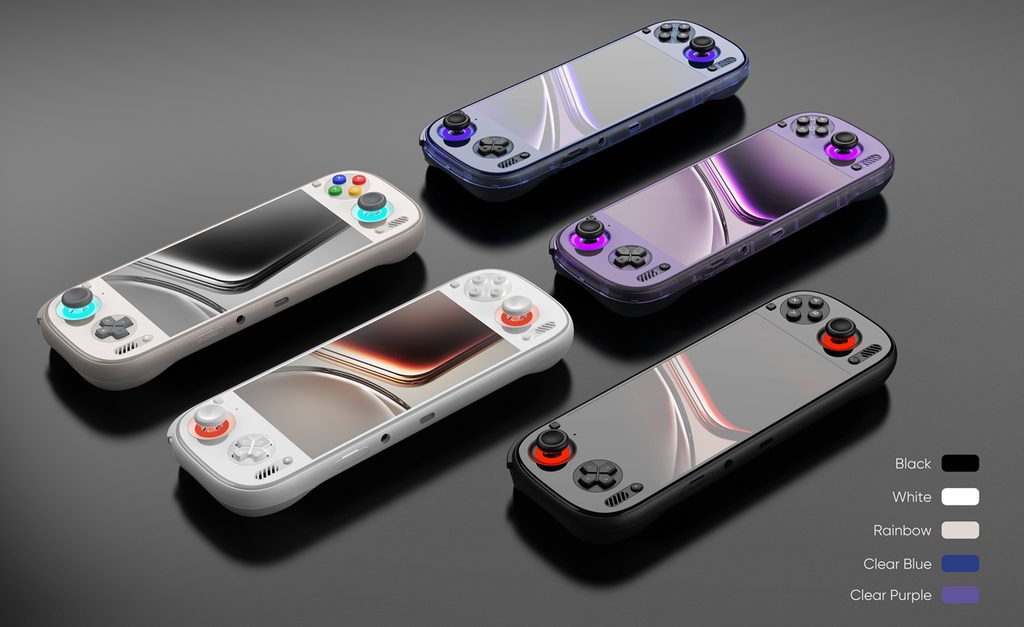
Buy it if you want maximum Android emulation performance, do not mind the size, and have a fixed PC game library that works with translation layers. Skip it if portability matters, if you want a pocketable retro device, or if you expect a full Windows-level PC gaming experience.
The Bottom Line
The AYN Odin 3 is a performance monster with a portability problem. It excels at what it does, but what it does is not for everyone. If you know your use case, it is a fantastic machine. If you are unsure, the size alone may be the deciding factor.
Disclosure: This article contains affiliate links. If you purchase through them, we may earn a commission at no extra cost to you.
《AYN Odin 3 Review: The Most Powerful Android Handheld You Might Not Actually Need》有1条评论