Choosing a camera in 2026 is less about brand loyalty and more about matching the tool to your workflow. The mirrorless market has matured to the point where every major manufacturer offers something genuinely excellent. Here are five international brands and their standout models for different needs.
Sony: The All-Rounder

Sony continues to dominate sales charts in Japan, holding five of the top ten best-selling camera spots. The A7 V earned EISA’s “Camera of the Year” award for its 33MP partially stacked sensor and BIONZ XR2 processor, which deliver fast readout speeds and reduced rolling shutter. Its AI-powered autofocus recognizes humans, animals, birds, insects, and vehicles, making it a genuine hybrid workhorse. The trade-off is Sony’s notoriously complex menu system and the need to set up everything manually.
Canon: The Beginner-Friendly Option
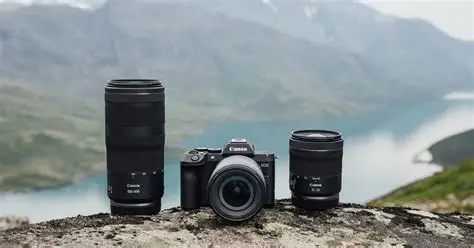
Canon’s EOS R8 Mark II finally brings in-body stabilization to the entry-level full-frame tier, along with a joystick for faster focus point selection and pre-capture mode for unpredictable subjects. The camera’s Dual Pixel autofocus remains one of the most reliable in the industry, and its menus are widely considered the most intuitive for newcomers. The main limitation is Canon’s RF-S lens lineup, which is narrower than Sony’s E-mount ecosystem.
Nikon: The Professional’s Choice
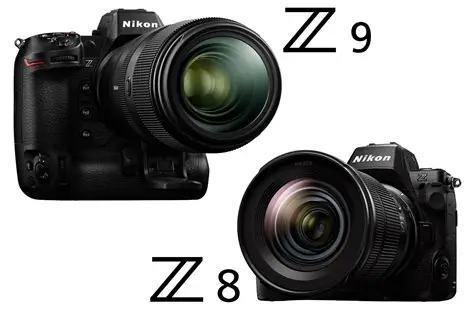
Nikon’s Z8 shares its 45.7MP stacked sensor and processing architecture with the flagship Z9, in a body roughly 30% smaller. It shoots 20fps RAW with full autofocus tracking and records 8K video, making it equally capable for wildlife, sports, and commercial work. The Z mount’s 55mm inner diameter allows for exceptional optical designs, and the FTZ II adapter maintains full compatibility with approximately 360 F-mount lenses. The lack of a mechanical shutter takes some adjustment.
Fujifilm: The Creative’s Companion

Fujifilm’s X-M5 has become a favorite among content creators for its compact size and impressive video specs, including 6.2K open-gate recording and 20 built-in Film Simulations for straight-out-of-camera JPEGs. The X-T30 III, meanwhile, won EISA’s “Best Buy Camera” award for its balance of portability, image quality, and accessible film simulation controls. Fujifilm’s APS-C sensors deliver image quality that rivals full-frame in good light, though they fall behind at high ISO.
Panasonic: The Video Specialist

Panasonic’s Lumix S5 II was the company’s first mirrorless camera to adopt phase-detection autofocus, combining it with depth-from-defocus technology for reliable subject tracking. The S1 II takes this further with 6K 60p open-gate video and 70fps burst shooting, making it a genuine hybrid for creators who split their time evenly between stills and video. Panasonic’s real-time LUT system is a standout for color grading workflows.
The Bottom Line
For pure all-around performance, Sony’s A7 V leads the pack. For beginners who value intuitive controls, Canon’s R8 Mark II is the easiest entry point. For professionals needing resolution and speed, Nikon’s Z8 delivers. For creators who prioritize color and portability, Fujifilm’s X-M5 or X-T30 III are unbeatable values. And for video-first shooters, Panasonic’s S1 II or S5 II offer the best hybrid experience. The best camera is the one that fits your hands, your workflow, and your budget.