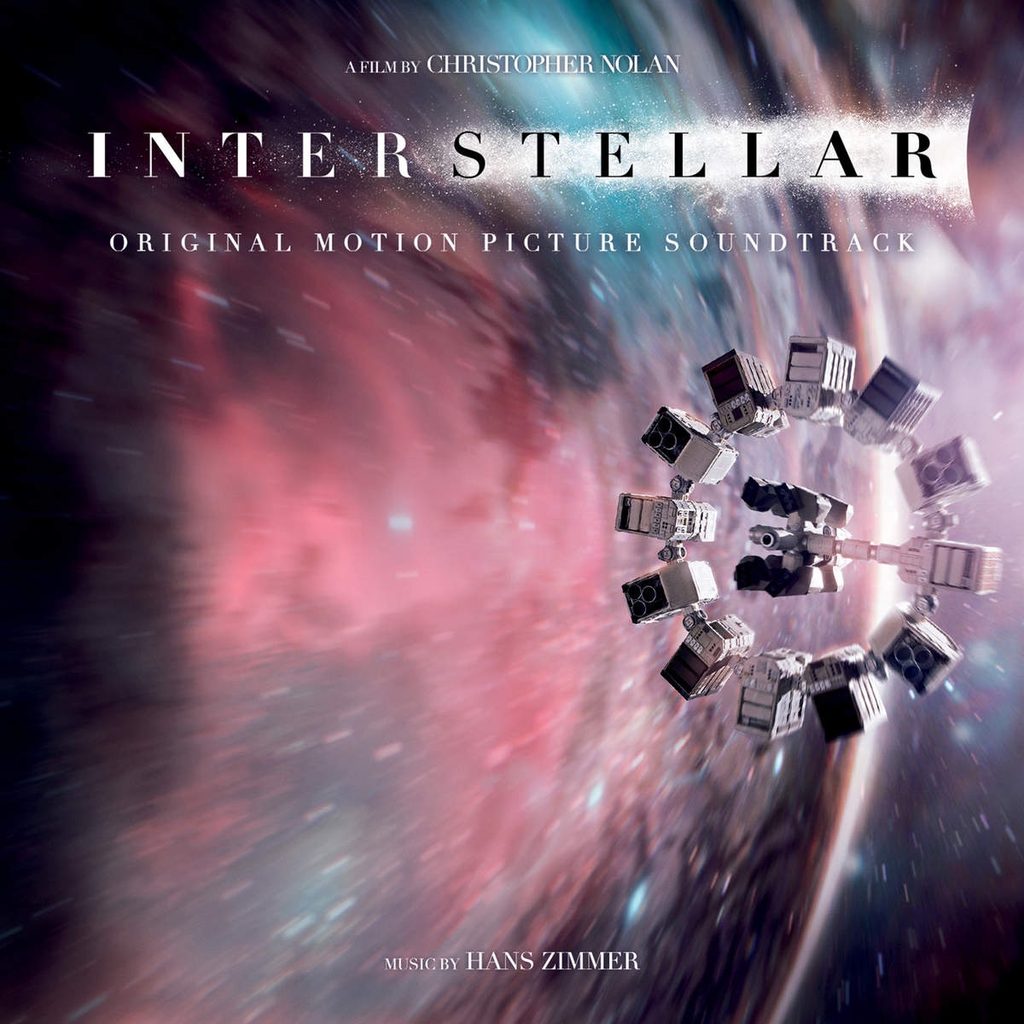
Interstellar is more than a science fiction film. It is a story about a father’s love, humanity’s will to survive, and the terrifying beauty of the cosmos. Directed by Christopher Nolan and released in 2014, the film blends hard science with deep emotion, asking what we would sacrifice to save our species—and whether love can cross the boundaries of time itself.
A Dying Earth and a Desperate Mission

The film is set in a near-future America where crop blight and dust storms have pushed civilization to the brink of collapse. Cooper, a former NASA pilot turned farmer, lives with his children, Murph and Tom. After discovering strange gravitational anomalies in Murph’s bedroom, Cooper and his daughter stumble upon a secret NASA base. There, Professor Brand reveals that a wormhole near Saturn—apparently placed by an unknown intelligence—leads to a distant galaxy with potentially habitable planets. Cooper is recruited to pilot the Endurance, leaving his children behind with a promise to return.
The Cost of Time

The mission takes the crew to a planet orbiting a supermassive black hole called Gargantua. Because of extreme time dilation, every hour spent on the planet’s surface equals seven years on Earth. This brutal physics becomes the film’s emotional core. When Cooper finally returns to the ship, his daughter has aged decades in what felt like moments to him. He watches video messages from a grown Murph, now the same age as him, and the weight of lost time becomes almost unbearable.
Sacrifice and the Tesseract
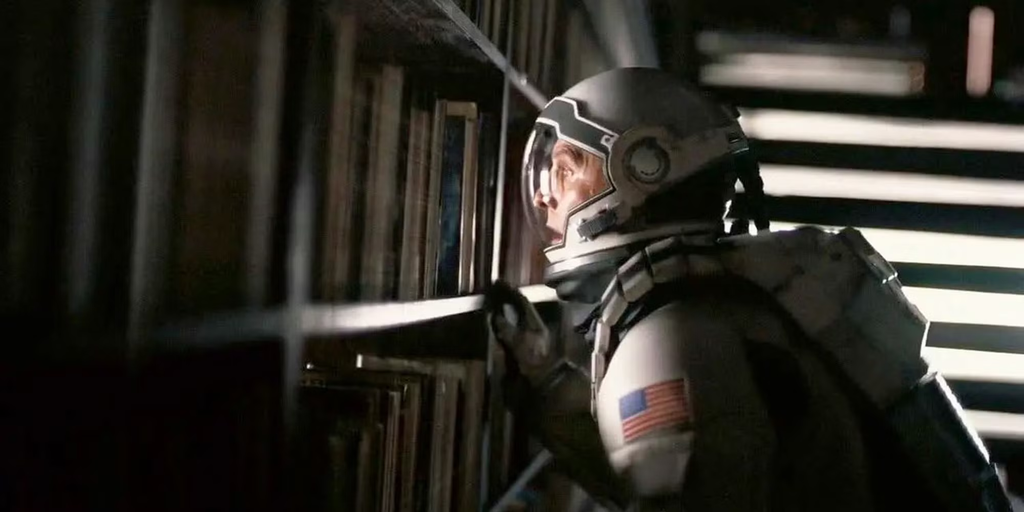
Cooper ultimately sacrifices himself, plunging into Gargantua’s singularity to transmit quantum data back to Earth. Instead of dying, he finds himself inside a “tesseract”—a five-dimensional space constructed by future humans who have evolved to manipulate time and gravity. From inside this space, Cooper communicates with his daughter across time, using gravity to send the data she needs to solve Professor Brand’s equation and save humanity.
Love as a Physical Force

The film’s most debated idea comes from Dr. Amelia Brand, who argues that love is not merely a human emotion but a force that transcends dimensions. She suggests it may be the one thing capable of reaching across time and space. Whether this is scientifically valid or simply poetic, Interstellar uses it to make a profound point: the bond between a parent and child can drive people to reshape the universe.
Why It Endures
Interstellar endures because it refuses to separate science from feeling. Its stunning visuals—based on real physics calculations by Nobel laureate Kip Thorne—are matched by its emotional honesty. It is a film about grief, hope, and the stubborn human refusal to let go. As Cooper says, “Love is the one thing we’re capable of perceiving that transcends dimensions of time and space.” Whether you watch it for the wormholes or the tears, Interstellar leaves you looking up at the stars a little differently.